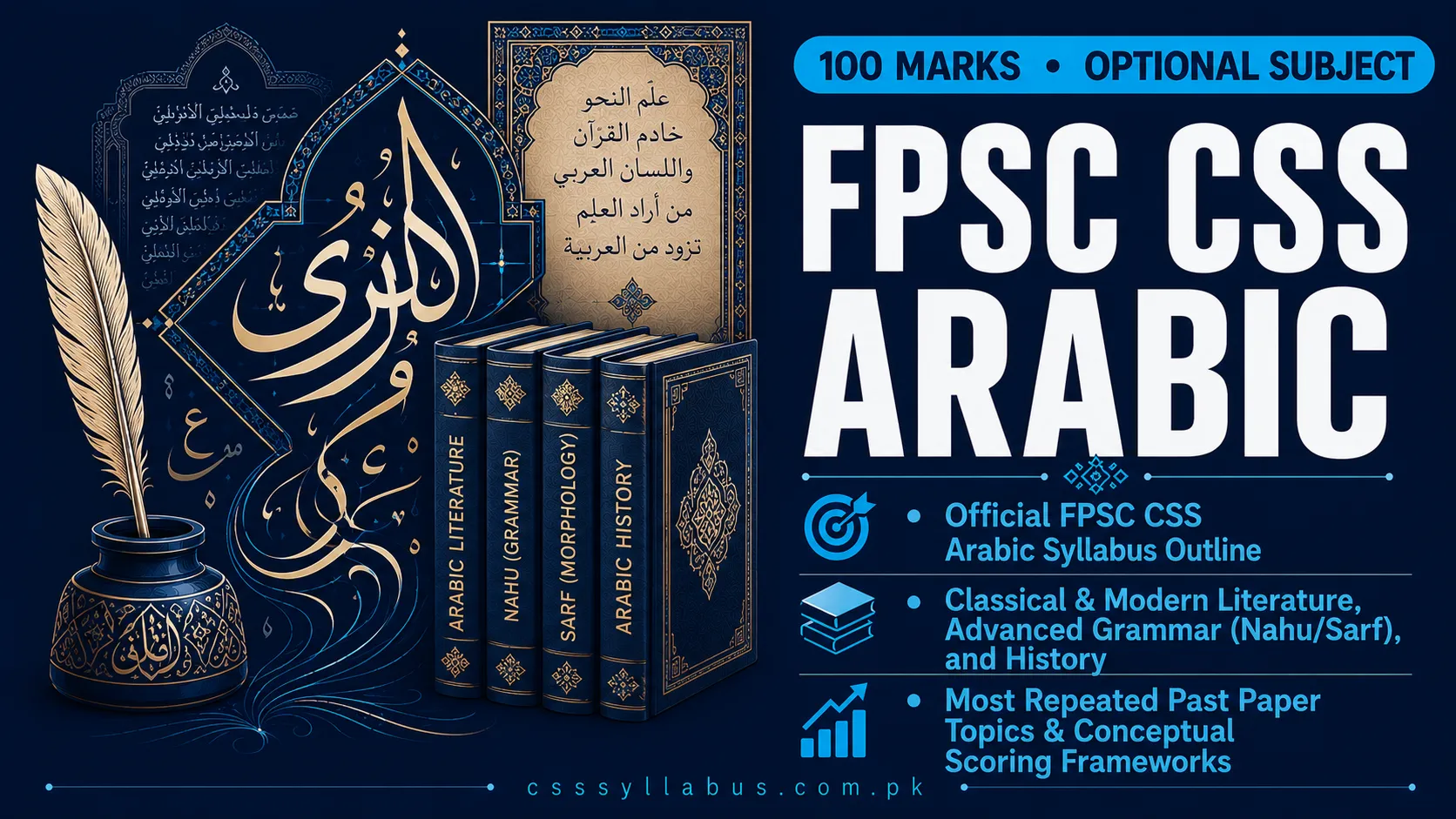
CSS Arabic is a 100-mark optional paper under Group VII of the CSS optional subjects — Social Sciences and Languages — a group that spans language subjects including Persian, Balochi, Pashto, Sindhi, and Punjabi alongside social science subjects including Anthropology, Sociology, Geography, Psychology, and Journalism and Mass Communication. FPSC sets the CSS Arabic syllabus to cover Arabic language history, classical Arabic literature, Quranic Arabic, modern standard Arabic, Arabic grammar and morphology, and the role of Arabic in Islamic scholarship and Pakistani religious education. Islamic Studies and religious sciences graduates select Arabic for its direct alignment with their academic background and its overlap with the Islamiat compulsory paper. Review the CSS optional subjects syllabus for combination rules and group requirements before confirming Arabic as your optional subject choice.
ARABIC (100 MARKS)
A. Pre-Islamic period (العصر الجاهلي)
- Influence of poets and poetry in Jahiliia period. (أثر الشعر و الشعراء في العصر الجاهلي)
- Literary markets in pre-Islamic Arabs especially Ukkaz (أسواق الأدب في العصر الجاهلي خاصة سوق عكاظ)
- Purposes and features of pre- Islamic poetry special reference to Mu’allaqat. (أغراض الشعر الجاهلي و مزاياه مع التركيز على المعلقات)
B. Dawn of Islam (عصر صدر الإسلام)
- Eloquence and Rhetoric of Holy Quran with examples from Quranic verses. (فصاحة القرآن و بلاغته مع الأمثلة من القرآن الكريم)
- Impact of Quran and Hadith on the subsequent literature. (أثر القرآن و الحديث في الأدب العربي)
- Poetry at the Dawn of Islam (الشعر في عصر صدر الإسلام)
C. Umayyad Period (العصر الأموي)
- Art of Flyting (فن النقائض)
- Erotic and platonic ghazal (الغزل الصريح والغزل العذري)
D. Abbasid and Spanish Period (العصر العباسي والأندلسي)
- Purposes and features of Abbasid poetry with special emphasis on the poetry of Mutanabbi, Abu Tammam, Abu Nuwas, AbulAtahia (أغراض الشعر العباسي و ميزاته مع التركيز على شعر المتنبي و أبي تمام و أبي نواس وأبي العتاهية)
- Prose and its different styles with special emphasis on style of IbnulAmeed, IbnulMuqaffa, Al-Jahiz and Al-Qazi al Fazil. (النثر و أساليبه المختلفة خاصة أسلوب ابن العميد و ابن المقفع والجاحظ و القاضي الفاضل)
- Spanish poetry, with special reference to poetry of Ibn e Zaidoon (الشعر الأندلسي خاصة شعر ابن زيدون)
E. Contemporary Arabic literature (الأدب العربي المعاصر)
- Development of Drama with special focus on services of Toufeeq al Hakeem (تطور المسرحية مع التركيز على أعمال توفيق الحكيم)
- Development of Novel with special reference to the novels of Taha Husain and Nageeb Mahfooz (تطور الرواية مع التركيز على روايات طه حسين و نجيب محفوظ)
- Development of short story with special focus on short stories of Mahmood Taimoor (تطور القصة القصيرة مع نموذج من القصص القصيرة عند محمود تيمور)
- Poetry with special focus on poetry of Ahmad Shouqi and Hafiz Ibraheem (خصائص الشعر مع التركيز على شعر أحمد شوقي و حافظ إبراهيم)
F. Common Topics of different periods
- Criticism from pre-Islamic era to the 4th Islamic Century (النقد في الأدب العربي: من العصر الجاهلي إلى القرن الرابع الهجري)
- Art of Oratory from pre-Islamic era to Umayyad period (الخطابة: من العصر الجاهلي إلى العصر الأموي)
- Development of Arabic literature in the Sub-Continent: (Ghulam Ali Azad in poetry and Shah WaliUllah in prose) (تطور الأدب العربي في شبه القارة الهندية: غلام علي آزاد في الشعر و شاه ولي الله في النثر)
G. Poetry for Arabic paper
- Verses from ode of ImraulQais (1-10) من قفا نبك من ذكرى حبيب ومنزل … إلى ولا سيما يوم بدارة جلجل
- Verses from Qaseedah of Zuhair bin Abi Sulma (50-62). من ومن لا يصانع في أمور كثيرة … إلى فلم يبق إلا صورة اللحم والدم
- Verses from poetry of Hassan bin Thabit (14-28) من فإما تعرضوا عنا اعتمرنا … إلى لعرض محمد منكم وقاء
- Verses from poetry of Ka’b bin Zuhair (33-40) من يسعى الوشاة بجنبيها وقوله … إلى أرى وأسمع ما لو يسمع الفيل
- Verses from poetry of Hafiz Ibrahim (1-10) من رجعت لنفسي فاتهمت حصاتي … إلى فيا ليتكم تأتون بالكلمات
- Verses from ode of Ahmad Shouqi (1-10) من ولد الهدى فالكائنات ضياء … إلى دون الأنام وأحرزت حواء
- Verses from Qaseedah of Imam Al Booseri (15-24) من من لي برد جماح من غوايتها … إلى فأنت تعرف كيد الخصم والحكم
H. Arabic Grammar (قواعد العربية)
- Syntax (النحو): Kinds of Sentence (Nominal and Verbal), kinds of Noun (“Proper and Common”, “Masculine and Feminine”, “Singular, Dual and Plural”, “Mu’rab and Mabni”), Case-Ending. (أقسام الجملة: الفعلية و الإسمية — أقسام الإسم: “المعرفة و النكرة”, “المؤنث و المذكر” “المفرد والتثنية و الجمع”, “المعرب والمبني — الإعراب)
- Morphology (الصرف): Etymology (roots), Mujarrad, Mazeed-feeh, Transitive and Intransitive verb, Active and passive voice. (الإشتقاق — المجرد والمزيد فيه — الفعل اللازم و المتعدي — الفعل المبني المعلوم و المبني المجهول)
Suggested Readings
| Suggested Reading Title | Author / Details |
|---|---|
| A Literary History of the Arabs | Reynold A. Nicholson, Published by Cambridge University Press |
| History of Arabic Literature (تاريخ الأدب العربي) | Ahmad Hasan Zayyat, Published by Darul Marifat دار المعرفة Beirut Lubnan |
| The Contribution of India to the Arabic Literature | Dr. Zubaid Ahmad, Published by Idara Saqafat Islamia, Lahore |
| Muallim-ul-Insha’a (معلم الإنشاء) | Maulana Abdul Majid Nadavi, Majlis Nashriyat Islami, Karachi |
| Modern Arabic Poetry | Arthur J. Arberry, Cambridge University Press London 1962 |
| Selections from Arabic Poetry & Prose (شعر والنثر العربي) | Dr. Khaliq Dad Malik, Published by Azad Book Depot, Lahore |
| Applied Arabic Grammar (تطبيق القواعد العربية) | Dr. Khaliq Dad Malik, Published by Azad Book Depot, Lahore |
| Tasheel Al-sarf wa Al-Nahv (تسهيل الصرف وتسهيل النحو) | Khan Muhammad, Published by Zia ul Quran Lahore |
| جواهر الشعر، جمع وترتيب وشرح الشاعر/ الشربيني مُريدة، طبع بدار الحديث القاهرة | Published by Darul Hadith Cairo |
| Arabic Literature (الأدب العربي) (Elective Arabic Course B.A. Punjab University Lahore) | – |
| الجامع في تاريخ الأدب العربي | بنا الفاخوري، دار الكتب العلمية، بيروت |
| تاريخ الأدب العربي | الدكتور شوقي ضيف، دار المعارف، مصر |